Vehicles
Steam locomotive
01 1104
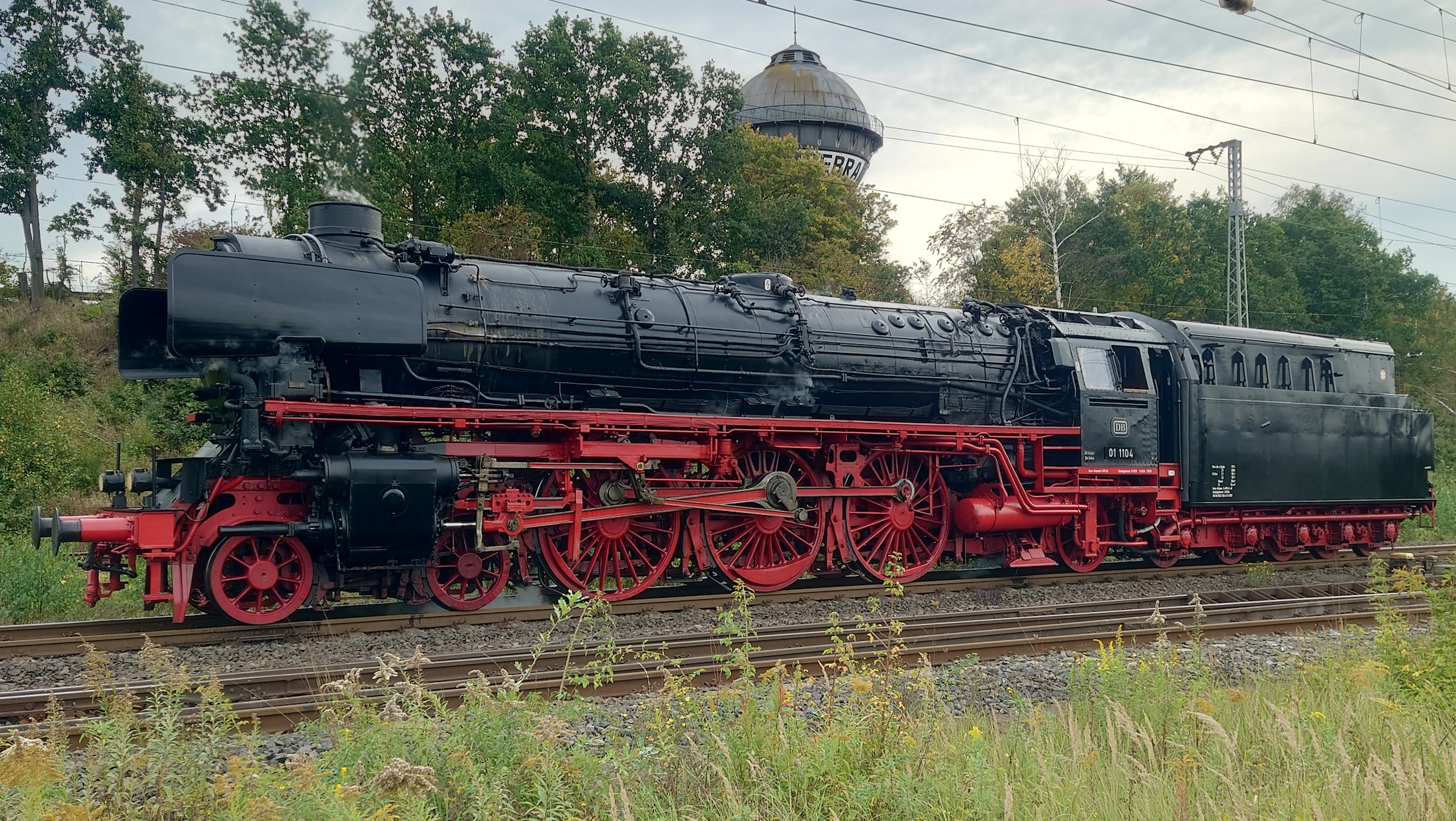
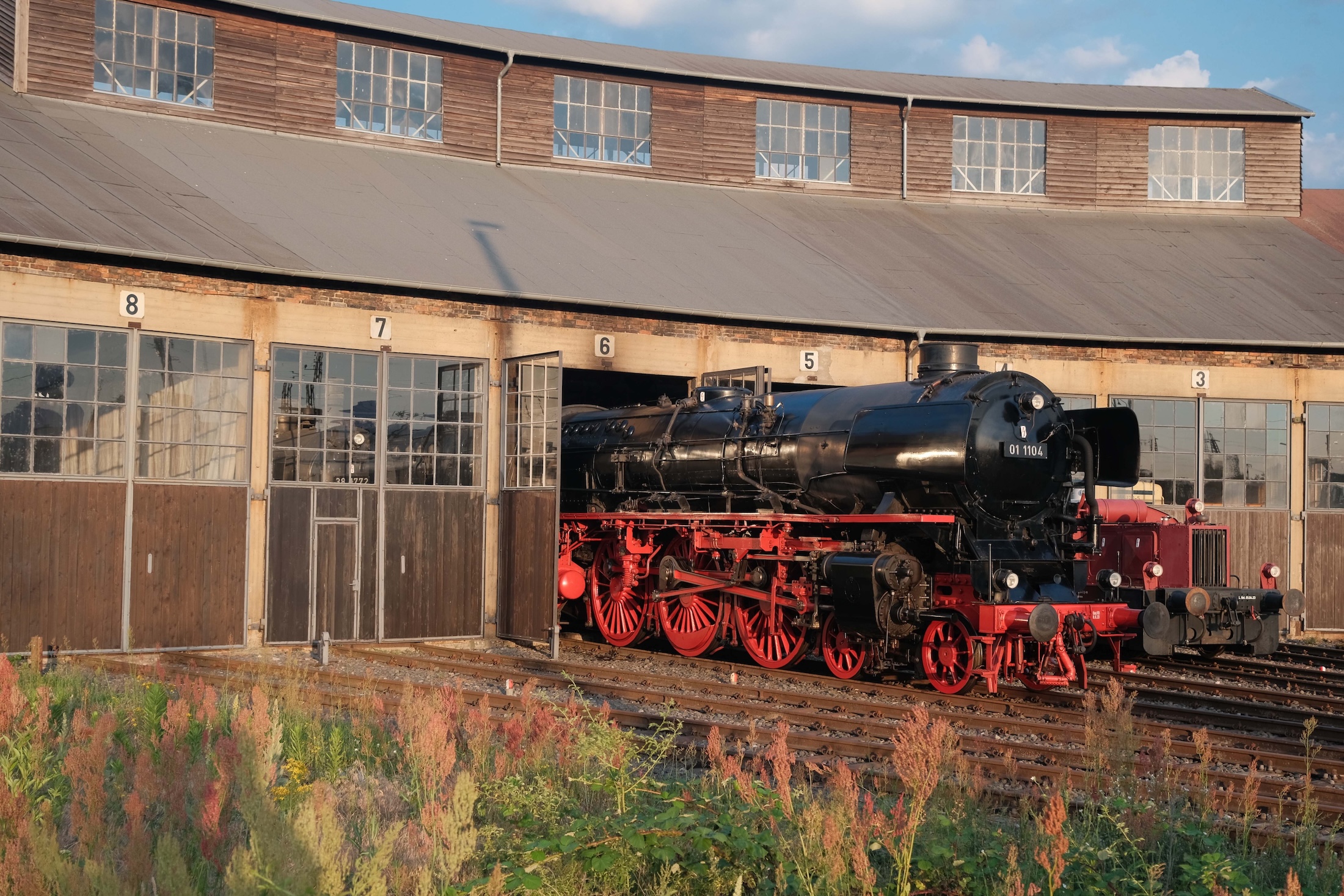
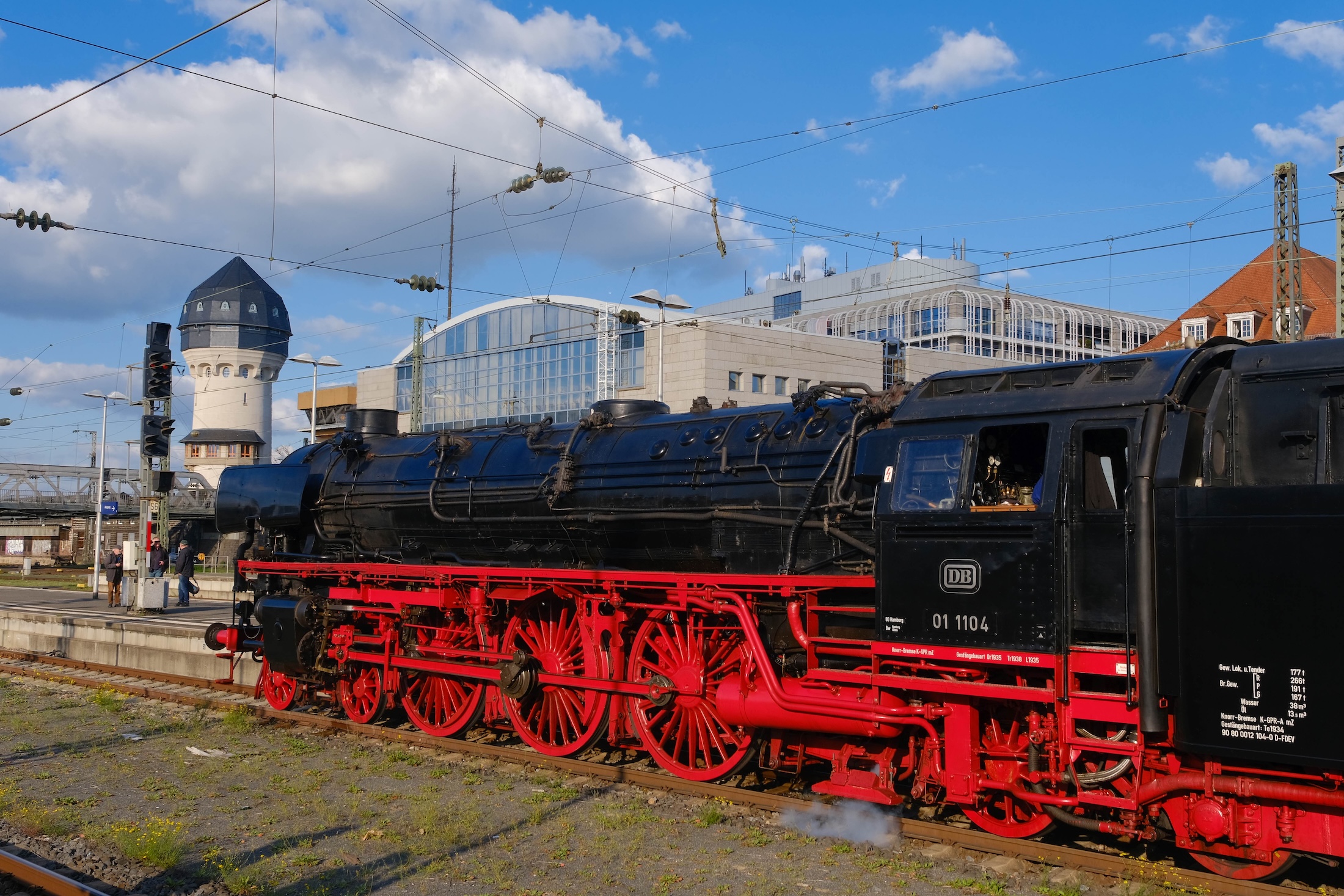
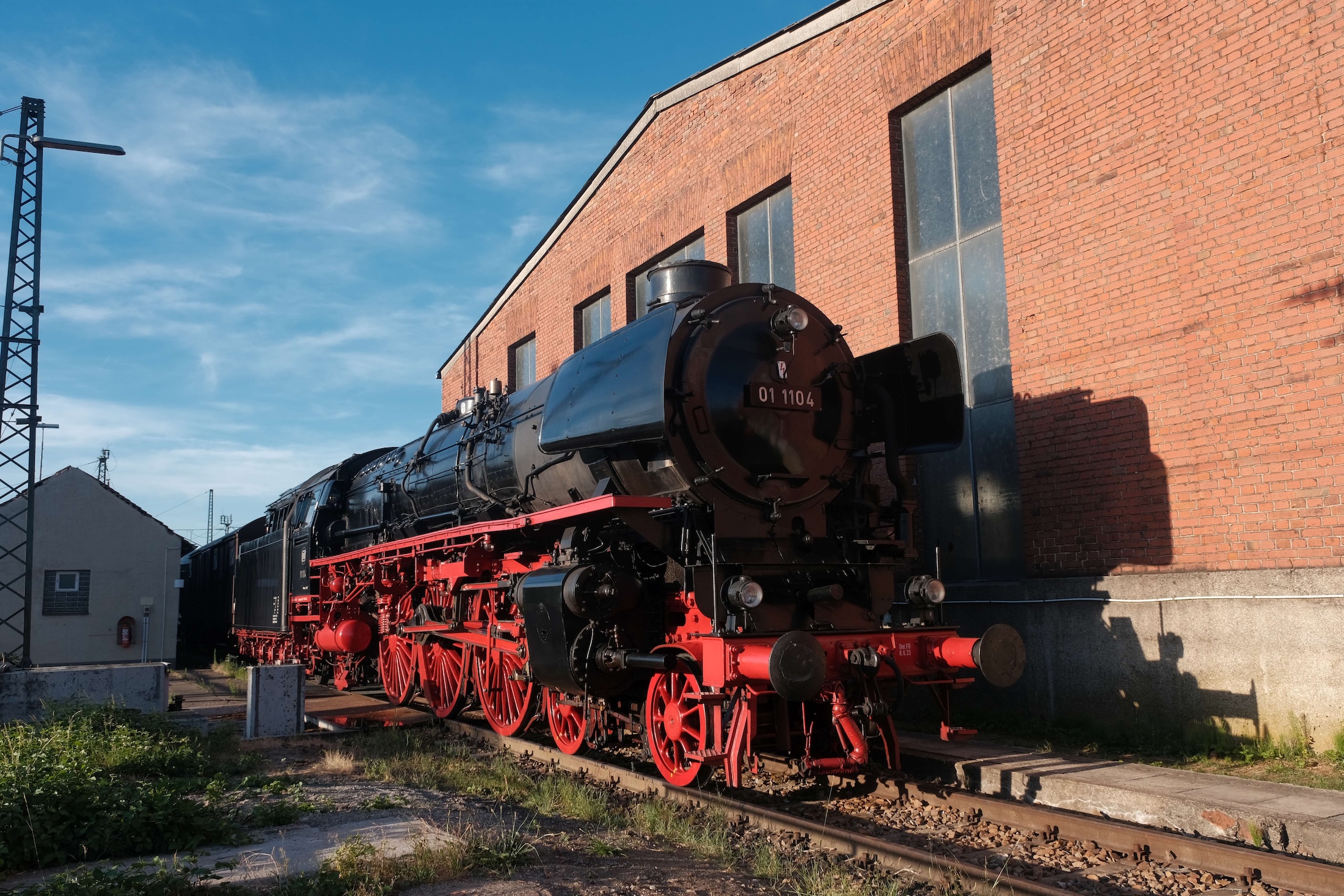
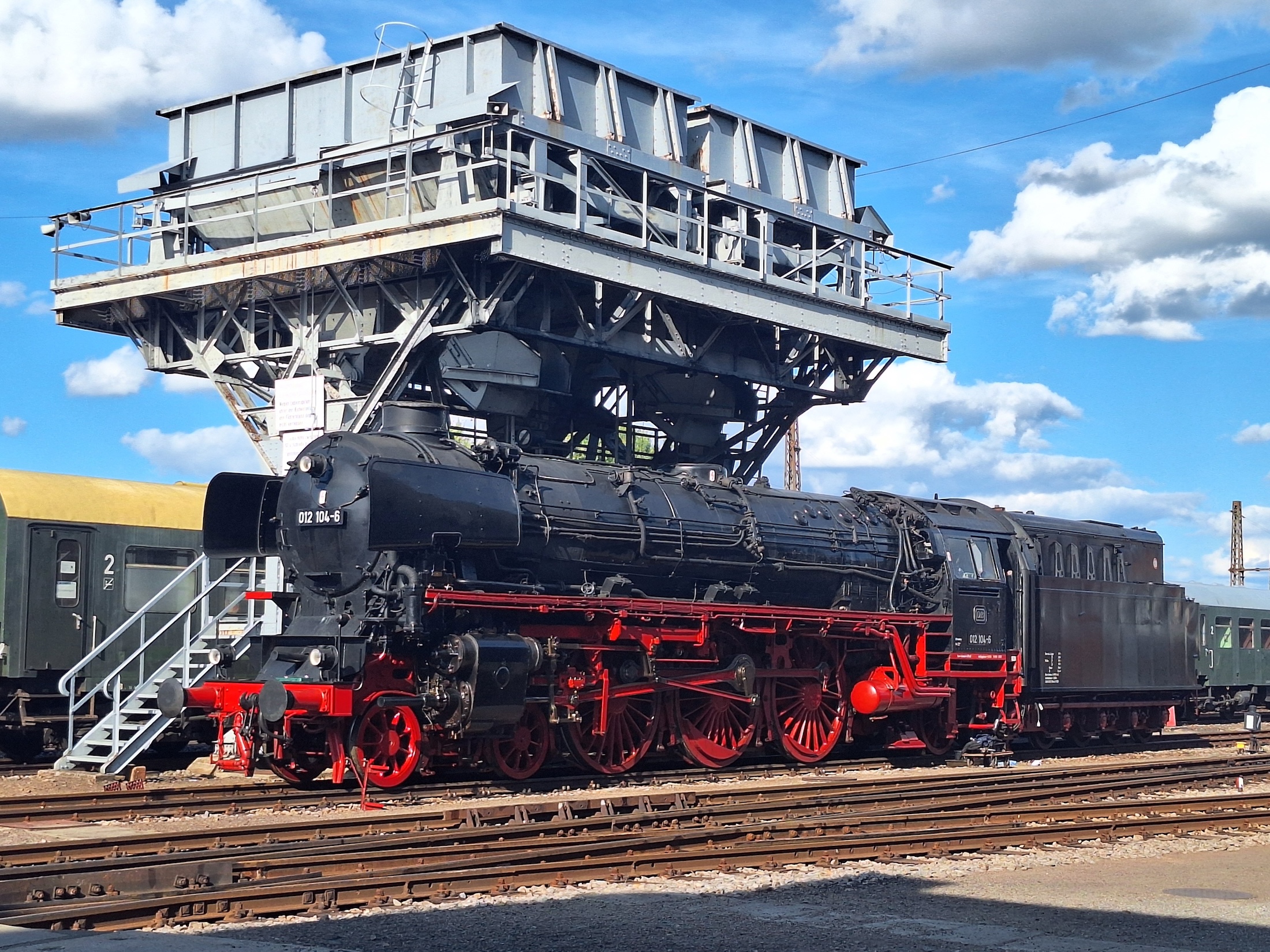
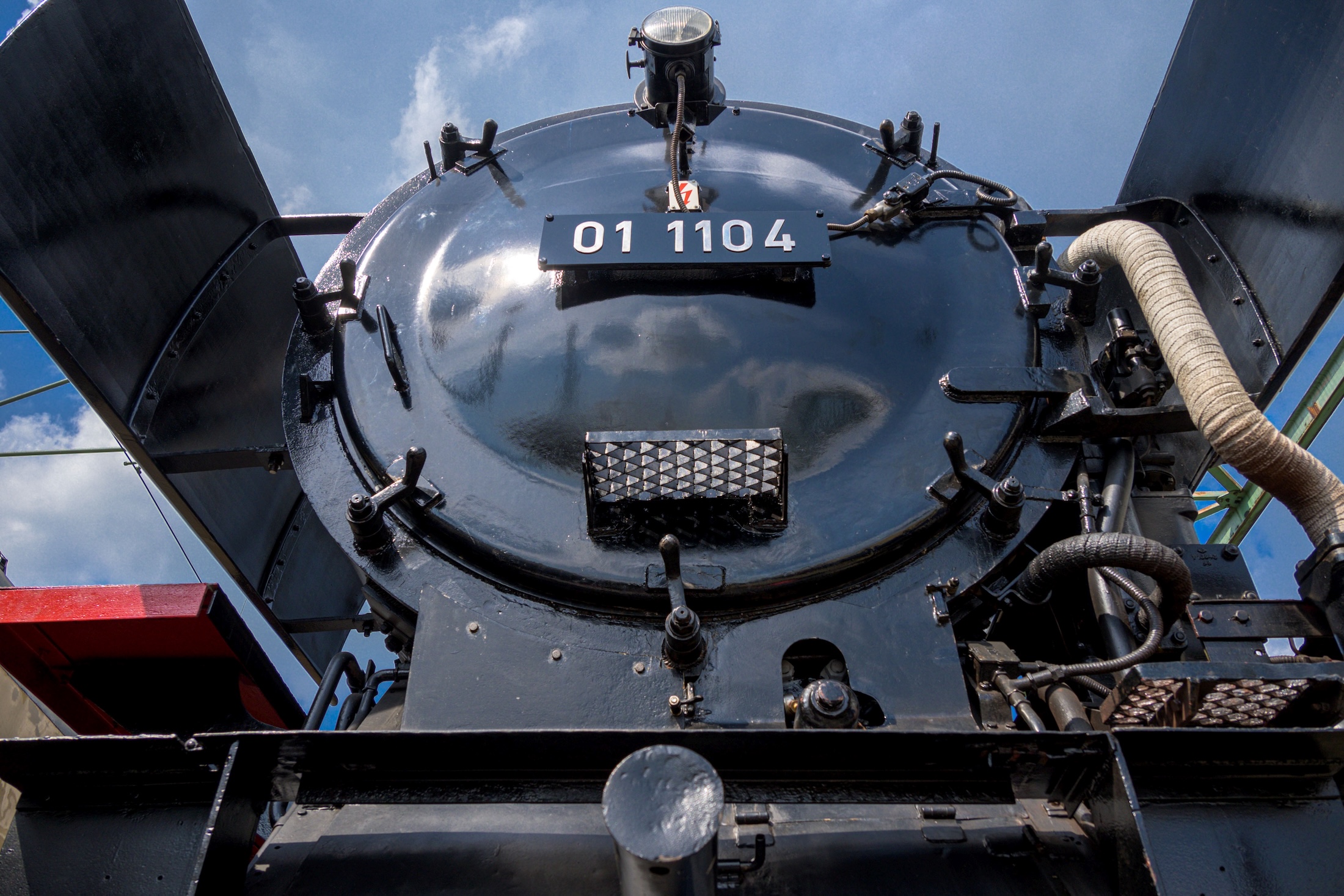
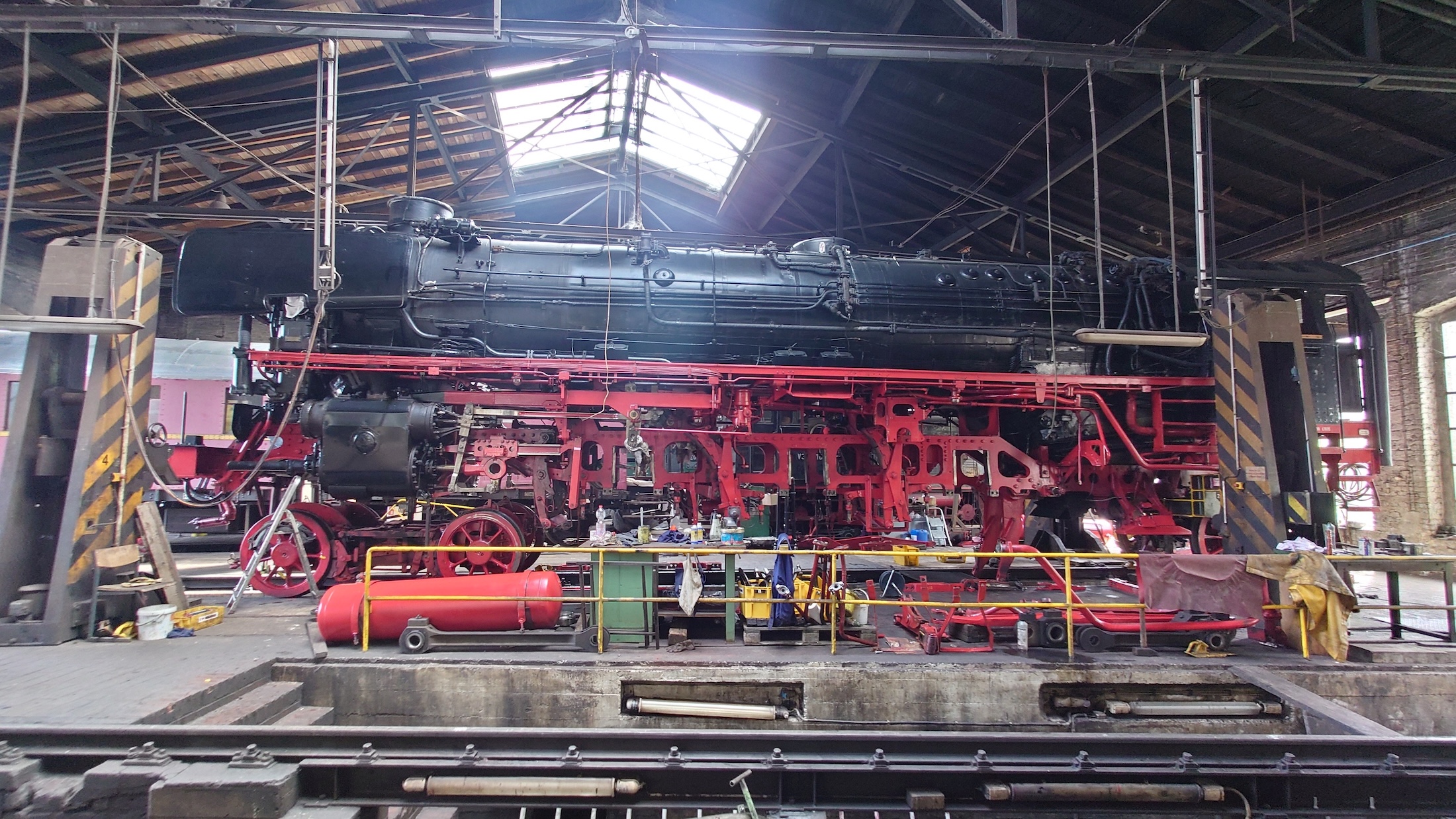
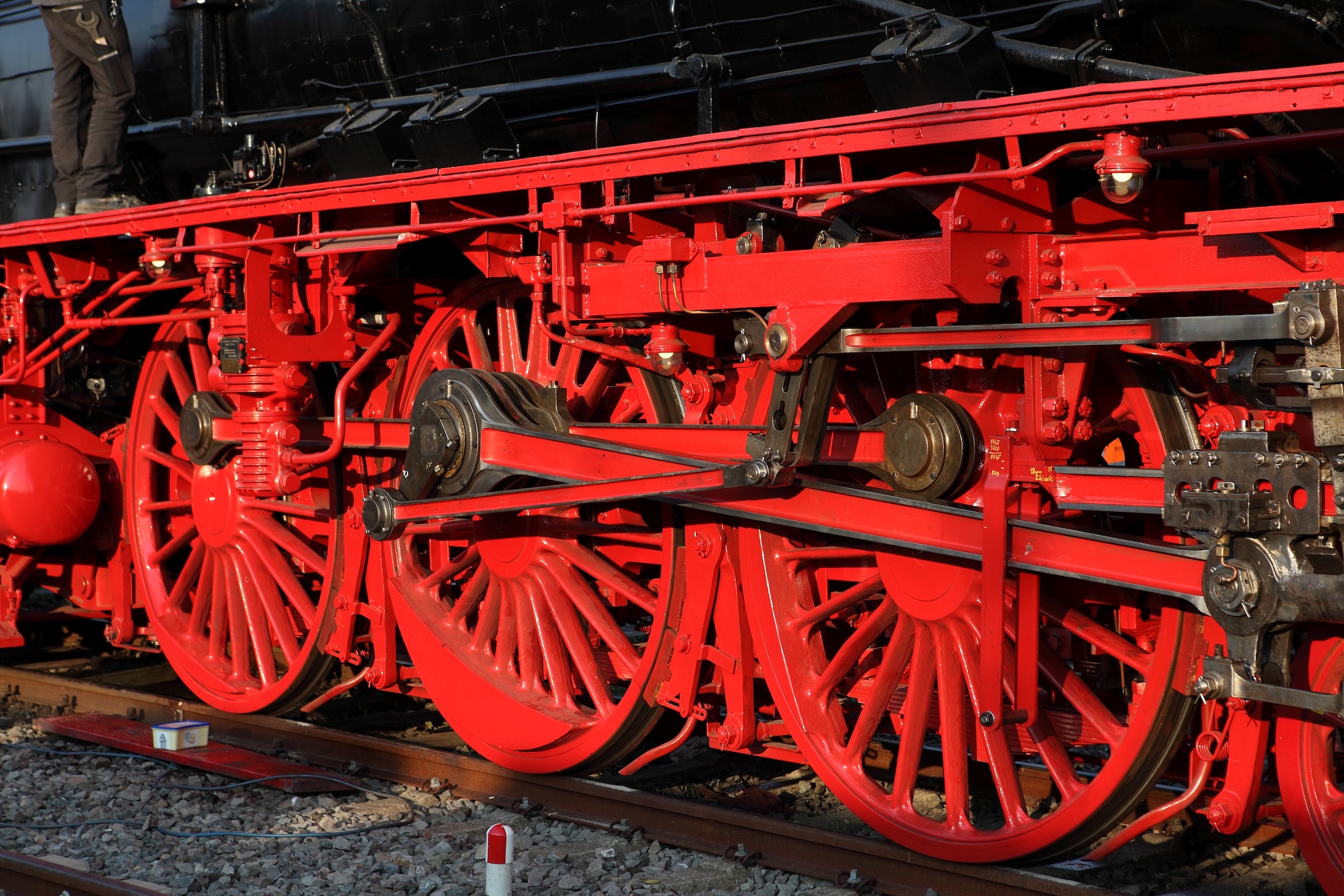
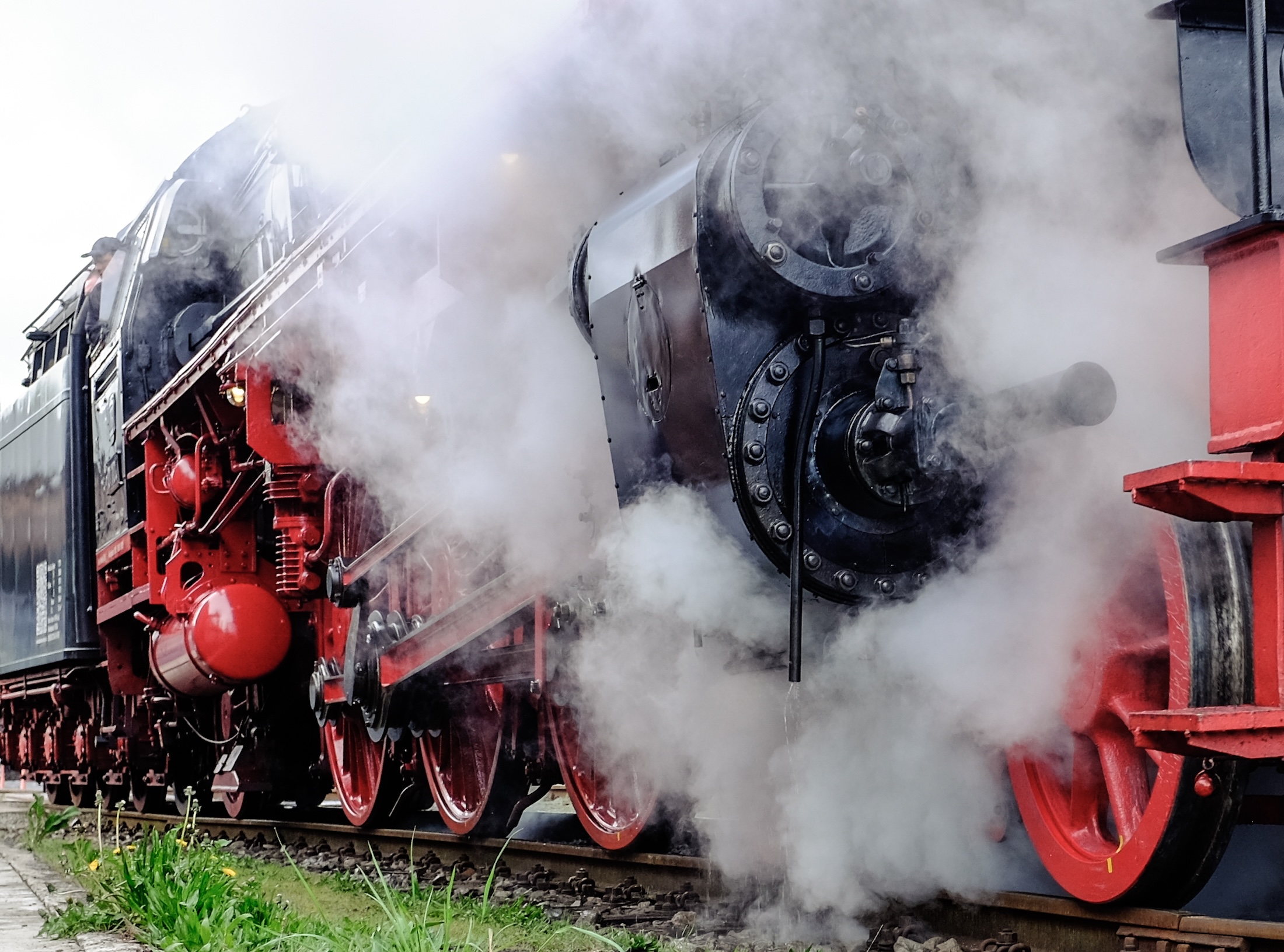
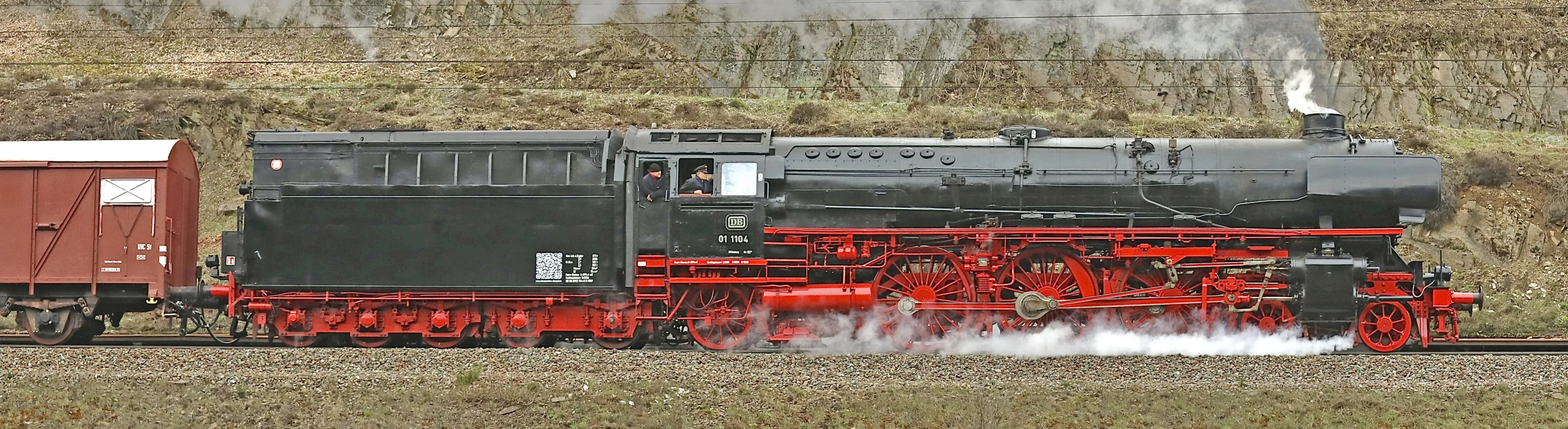
01 1104 is the technical culmination of four decades of development based on the legendary Class 01 and its classic ‘Pacific’ wheel arrangement, featuring a smoother ride and higher performance thanks to an additional centre drive unit for the 2-metre driving wheels, roller bearings on the rods and a high-performance boiler fired by two oil burners. Enthusiasts know: only this locomotive sounds like a V8 Mustang, like a jet fighter… in a class of its own!
The centrepiece of our club’s activities is 01 1104 (012 104-6), the last to be built of the surviving DB Class 01.10 express steam locomotives. Put into service in 1940 and modernised from 1954 onwards, only the Class 01.10 was capable of hauling the heaviest express trains at speeds of up to 140 km/h. In 1975, an English doctor saved 01 1104 from being scrapped and showcased it as the star attraction on the island. In 2008, restoration work began under the guidance of the founding members of the association, which was established in 2010. The restoration ultimately took a full 15 years. In 2023, 01 1104 ran under steam for the first time and has since been inspiring young and old alike with its engineering. 01 1104, the only original 01.10 running under steam!
Technical data
- Type: 2'C1' h3
- Year of manufacture: 1940 (at BMAG, Berliner Maschinenbau AG, formerly L. Schwartzkopff in Berlin-Wildau
- Conversion to a high-performance locomotive with a new boiler: 1954
- Top speed: 140 km/h
- Power: approx. 2,470 PS
- Operating weight: 177 t
- Tender: 2'3 T38
- Fuel system: Main oil firing (since 1957)
Büe 371 ‘Polish Pike’ accompanying carriage
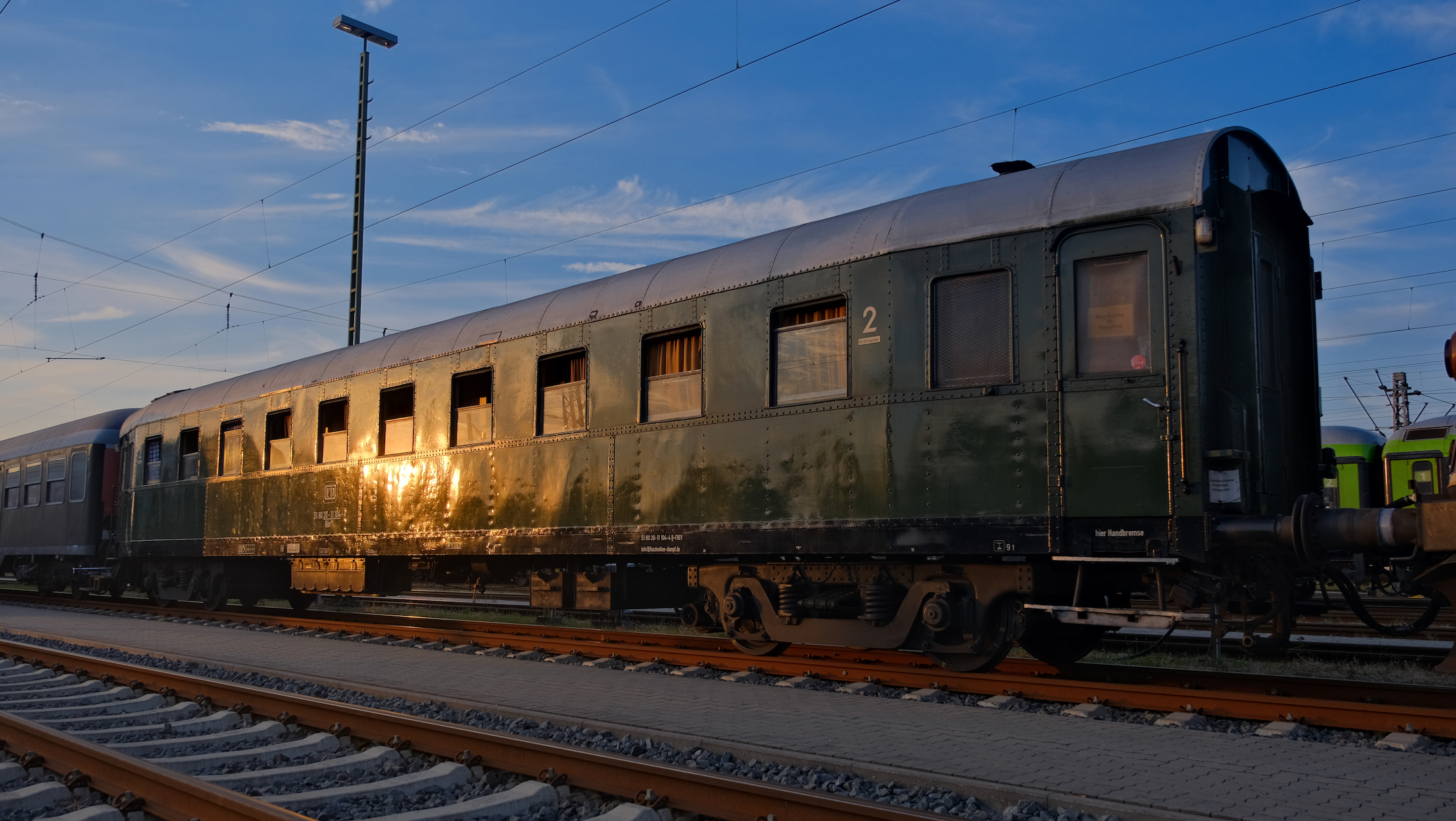
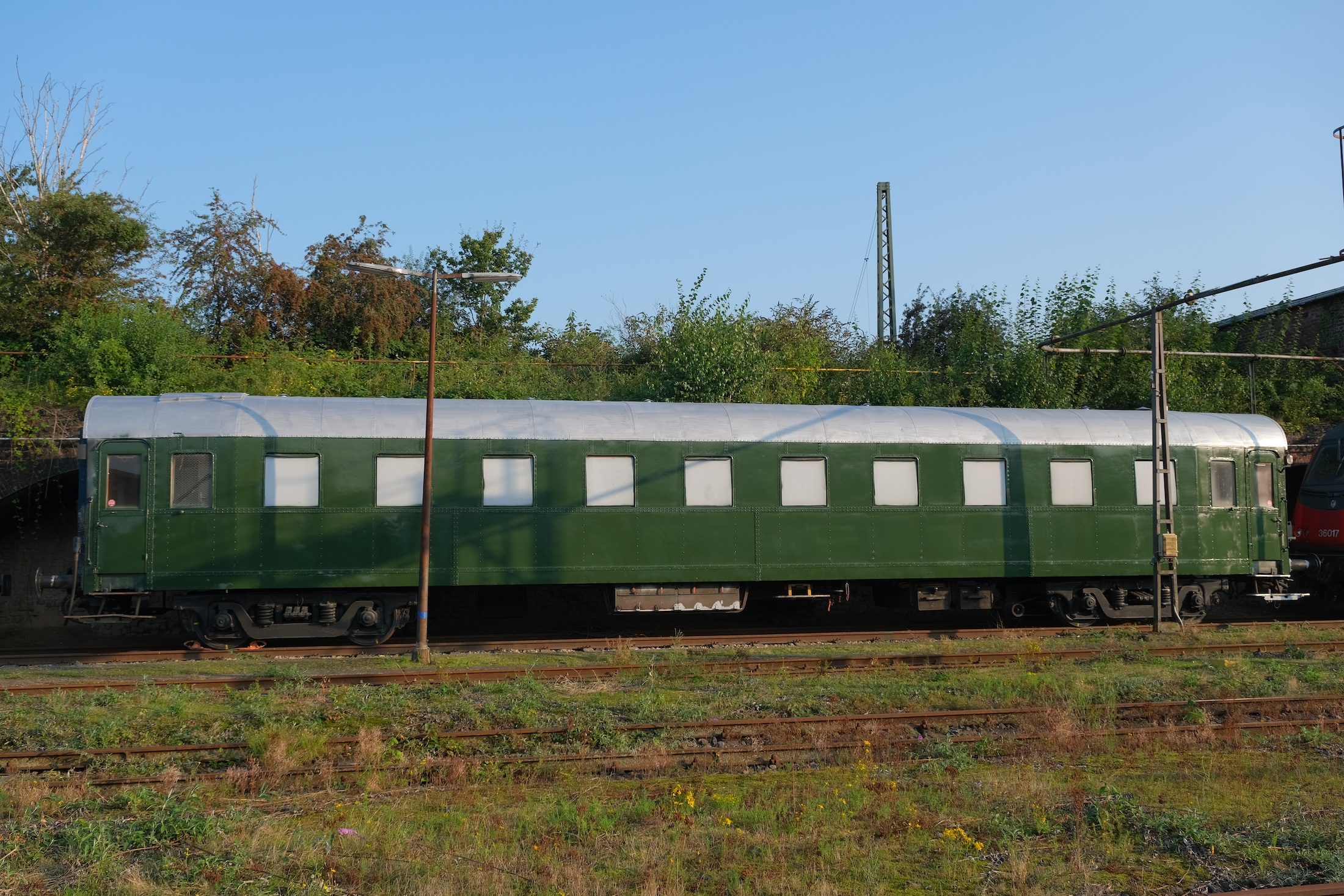
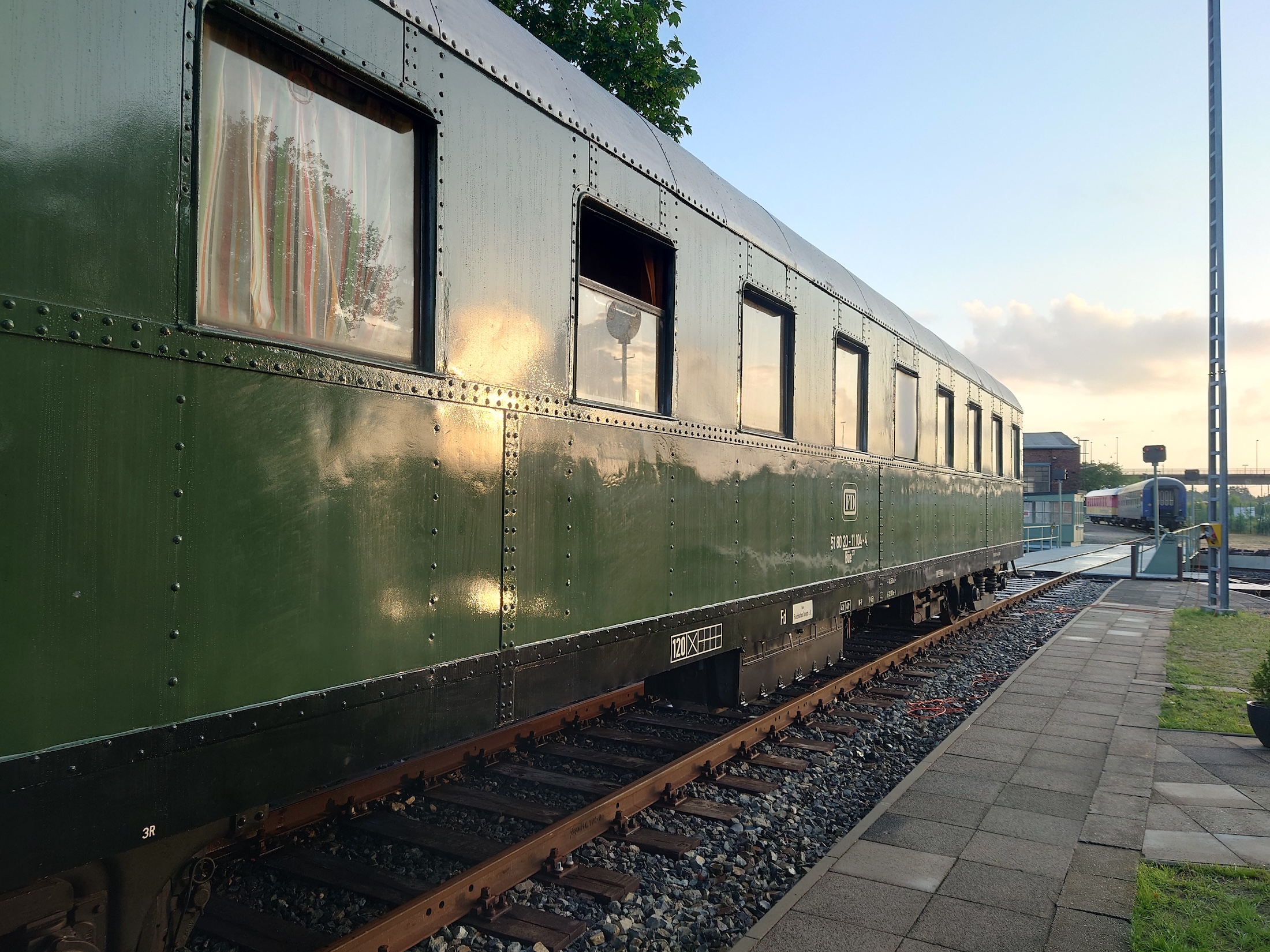
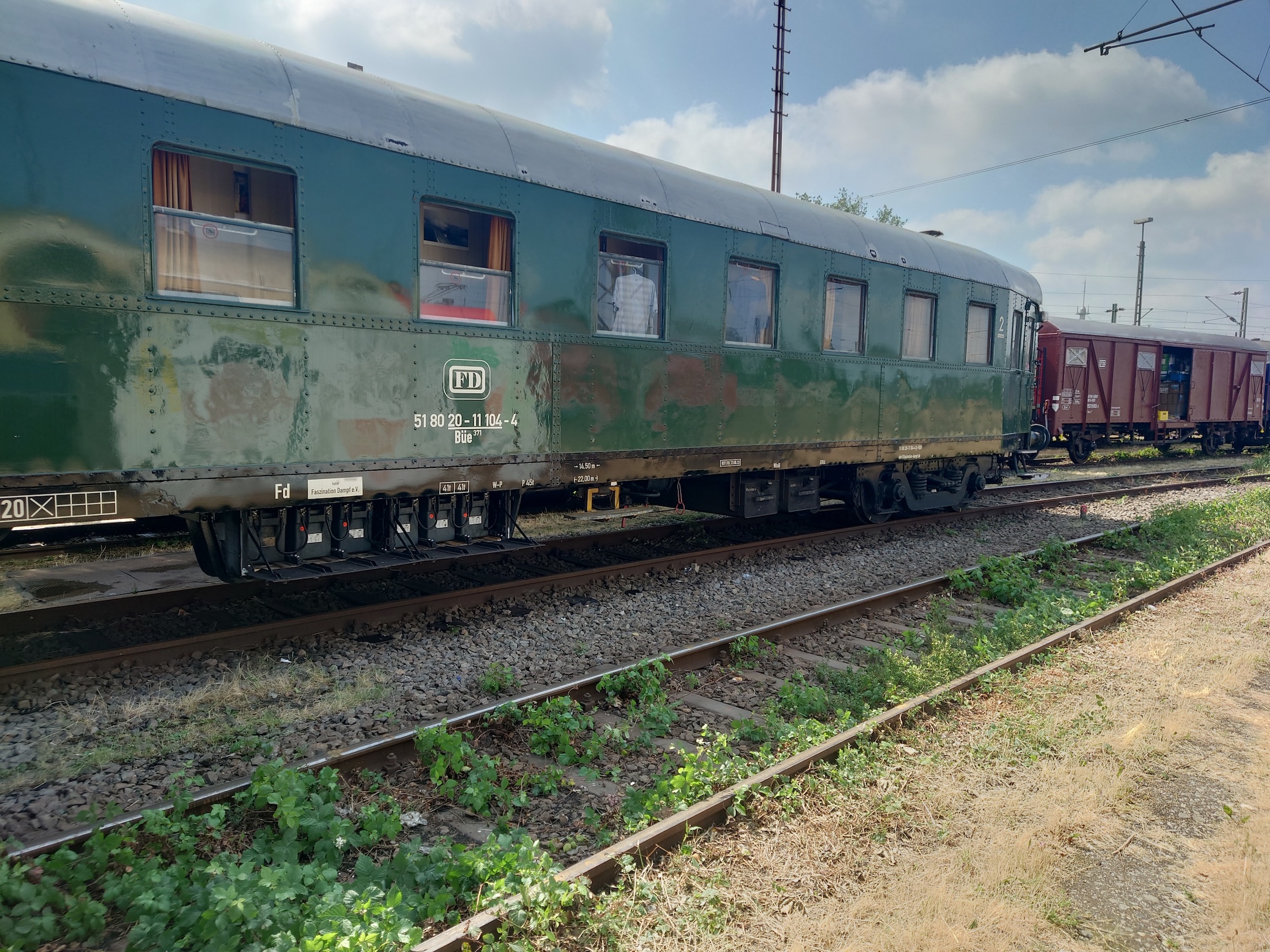
The carriage, registered under NVR number 51 80 2011 104-4 D-FDEV, is a former passenger carriage of Polish origin, constructed entirely of steel. The shape of the carriage is strongly reminiscent of German passenger carriages from the 1920s, which were known as ‘pike carriages’ due to their carriage bodies tapering towards the ends. Unlike the German ‘Hechtwagen’, where the roofs were raised above the entrances towards the ends of the carriage, the roof line of the Polish carriages remained at the same height along the entire length of the body. Carriages of the Polish design – many of which remained in service with the German State Railways after the Second World War, including the carriage described here – were unofficially referred to as ‘Polish Hechtwagen’ to distinguish them from carriages of the German design.
The carriage was built in 1929 at the Lilpop Rau i Loewenstein engineering works in Warszawa (Warsaw) as a third-class seating carriage and entered service with Polskie Koleje Państwowe (PKP) under the number 13922 and the type designation Chrx.
In 1939, the carriage temporarily came under Soviet control before falling into the hands of the German occupying forces around 1941/42. From then on, it was used in the ‘General Government’ by the Deutsche Reichsbahn (DRB) as a C4ü-30, but retained its original PKP number 13922.
After the end of the war, the carriage was in West Germany. Negotiations regarding the return of captured Polish carriages to the PKP broke down, and in 1953, 13922 was converted and modernised at the Fuchs carriage works in Heidelberg into a second-class seating carriage with ten enclosed compartments. It was subsequently used by the Deutsche Bundesbahn (DB) as a B4üwe-30/50 with the number 250 471II (third allocation following the loss of two carriages during the war). Following renumbering in accordance with UIC standards to 51 80 2011 104-4 and a change to the class designation Büe371, the carriage remained in service until it was withdrawn in December 1972.
Following its withdrawal from service, the carriage was converted (at the Limburg repair depot) into a railway service carriage and was used by DB and subsequently DB AG until the mid/late 1990s as a 421-type residential and sleeping carriage with the number 60 80 9911 099-1 in construction train service.
Our accompanying carriage is the only operational ‘Hecht’ – or Polish ‘Hecht’ carriage – in Germany, which is why we are particularly proud to be able to present it in such an authentic and fitting manner alongside our 01 1104!
Technical data
- Type: Büe 371
- Year of manufacture: 1929
- Length over buffers: 22 m
- Maximum speed: 120 km/h
- Operating weight: 41 t
- Brake type: Block brake, Westinghouse type (W, single-line)
Workshop wagon
Gbs-uv 254
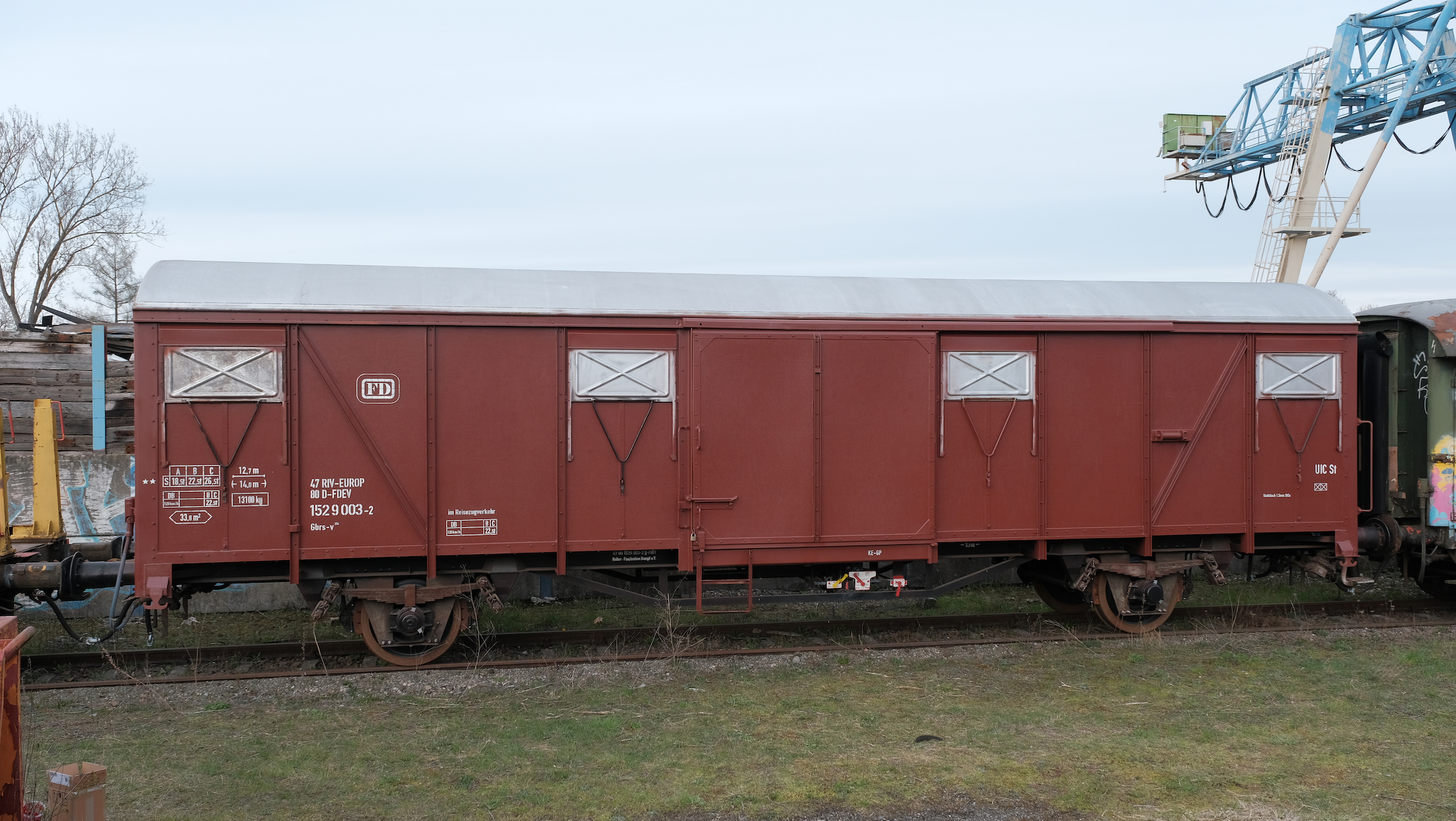
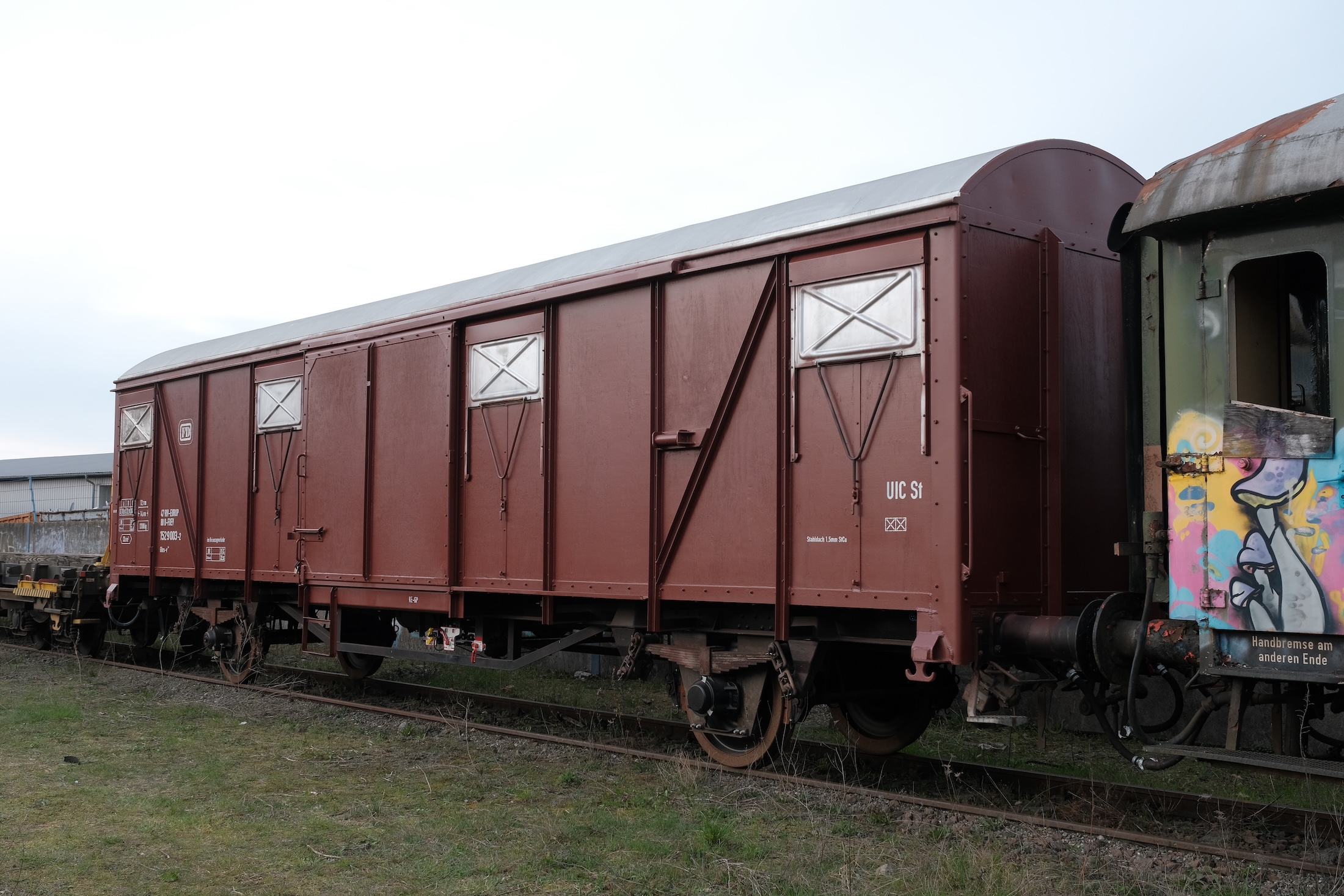
The vehicle, registered under NVR number 47 80 1529 003-2 D-FDEV, is a covered goods wagon of the Deutsche Bundesbahn (DB) with a steel barrel-shaped roof and continuous pipework for steam and electric heating.
From 1961 onwards, the DB procured a large number of two-axle covered goods wagons with barrel roofs and a loading length of 12.7 m, which complied with standardised UIC dimensions. The wagons were initially classified as Glmms 61, later as Gbs 254, and belonged to the Western European freight wagon pool (RIV-EUROP). In terms of braking, the wagons were designed for a maximum speed of 100 km/h; in terms of running performance, for 120 km/h (two stars next to the international load limit grid).
For the carriage of general cargo on passenger services, around 940 of these wagons were fitted with through-wiring for steam and electric heating (up to 1,500 V). This special equipment was reflected in the class designations Glmmehs 61 (until 1965), Gbrs-v 254 (until 1980) and, finally, Gbs-uv 254. The carriages in question were marked with a supplementary load limit table valid for DB domestic services, based on the international load limit table but with a reduced payload for 120 km/h. The last Gbs254 carriages were taken out of service by DB AG in the early 2000s. Some of the carriages were subsequently put to further use, for example as stationary storage facilities at various locations.
The vehicle discussed here was built in 1963 by the manufacturer ‘Deutsche Industrie-Werke AG’ in Berlin-Spandau with the factory number 27/847 and entered service with DB in the same year as 194 511. With the introduction of the UIC numbering system, the carriage was renumbered 155 9 211, later 153 0 003 and finally 152 9 003. Its class designation was ultimately Gbs-uv 254. At the end of its service life, the vehicle was used as a ‘trailer for the standard equipment rescue train’ and was eventually stored in Hof, in northern Bavaria.
In 2015, the Faszination Dampf e. V. (FD) association was able to purchase the carriage from DB AG. As it is fitted with through-pipes for both steam and electric heating, the carriage is particularly well suited for use as a supply carriage for its intended purpose: providing logistical support for heritage journeys with steam locomotives.
Our Gbs-uv 254 is therefore a perfect fit for us, both historically and technically. These carriages were once commonly used behind 01.10 locomotives on express trains, and today the carriage houses essential spare parts, workshop equipment and operating supplies for us.
Technical data
- Type: Gbs-uv 254
- Year of manufacture: 1963
- Length over buffers: 14 m
- Maximum speed: 120 km/h
- Unladen weight: 13 t
- Payload (at 120 km/h): 22.5 t
Köf II 6525